
“This post is not written by a marketing agency employee, but personally by the Chief Director of Lucenne Clinic, sharing insights directly from the consultation room.”
Thank you for the overwhelming response to my previous post on ‘Tech Neck.’ Many of you resonated with how smartphone habits accelerate neck aging.
“I’d never heard of Tech Neck before, and had no idea neck wrinkles were such a complex issue.”
“Everyone’s so focused on facial care, but I’ve completely neglected my neck.”
Reading these comments, I realized something important. Many people are concerned about neck aging, but accurate information about “why neck wrinkles are so hard to eliminate” remains frustratingly elusive.
Today, I’m putting aside sentimental introductions. As a physician, I want to address your most burning question: “Why do neck wrinkles form, and why are they so persistent?” Let’s explore the medical and physiological mechanisms in depth.
After all, knowing your enemy is half the battle won.
Part 1. [Medical Deep Dive] The 3-Stage Mechanism of Neck Wrinkle Formation
Neck wrinkles aren’t simply “creases from folded skin.” They’re complex aging manifestations combining anatomical vulnerability, physiological aging, and mechanical adhesion.
Stage 1: Anatomical Vulnerability — An Inherently Thin Defense
The dermis of neck skin is only about 2/3 the thickness of facial skin. Additionally, it has significantly fewer sebaceous glands, making natural oil barrier formation difficult.
Reduced Collagen Density:
A thinner dermis means less absolute quantity of collagen and elastin supporting the skin. While it’s well-known that collagen decreases by approximately 1% annually after the mid-20s, the neck starts with less “capital,” so the same 1% loss feels far more significant.
Weakened Resistance to External Stress:
When exposed to UV radiation (photoaging) or dryness, the neck’s recovery resilience deteriorates much faster than the face. While we diligently apply sunscreen to our faces, we often forget our necks—making them the frontline of photoaging.
Stage 2: Muscle Dynamics — Platysma Aging and ‘Vertical Bands’
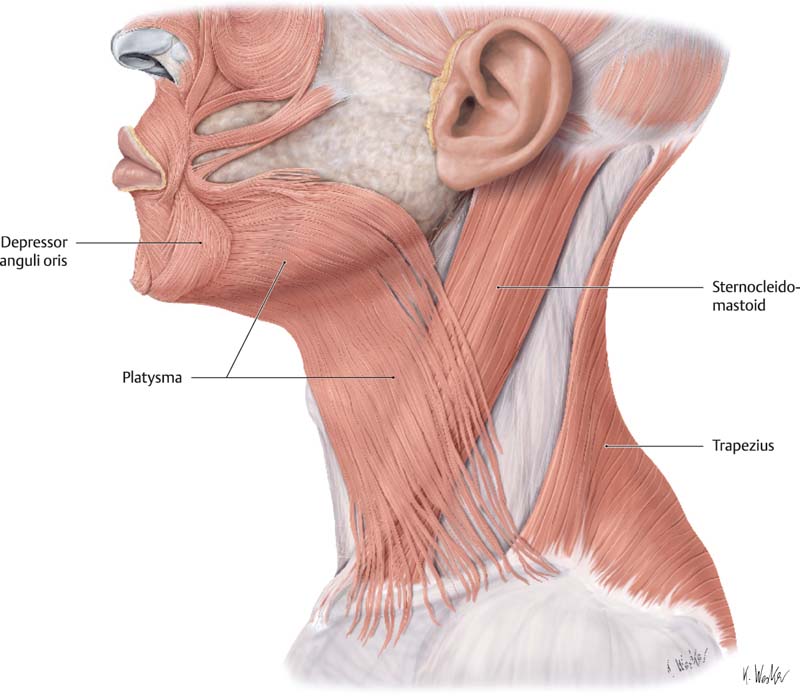
The platysma muscle covering the front of the neck is the key to understanding neck wrinkles. Unlike other muscles, it isn’t firmly anchored to bone but floats just beneath the skin.
Muscle Separation and Tension:
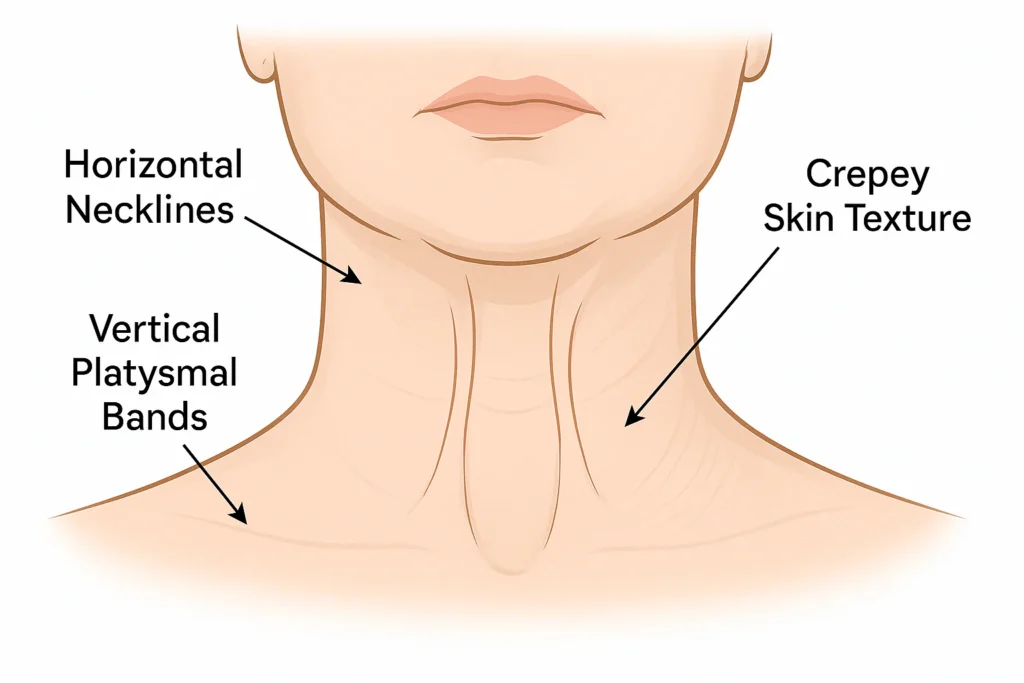
As aging progresses, the fascia holding the platysma loosens, causing the muscle to separate laterally. As compensation, the medial edges contract strongly—creating those ‘vertical bands’ that resemble a turkey neck.
Recent FDA-approved clinical studies show that when Botox is precisely injected into the platysma, approximately 85% of patients experienced significant vertical band reduction.
Downward Pull:
The overactive platysma pulls skin downward, blurring the jawline and creating that dreaded “my jawline disappeared” complaint.
Stage 3: Histological Adhesion — The Real Reason Horizontal Lines Deepen
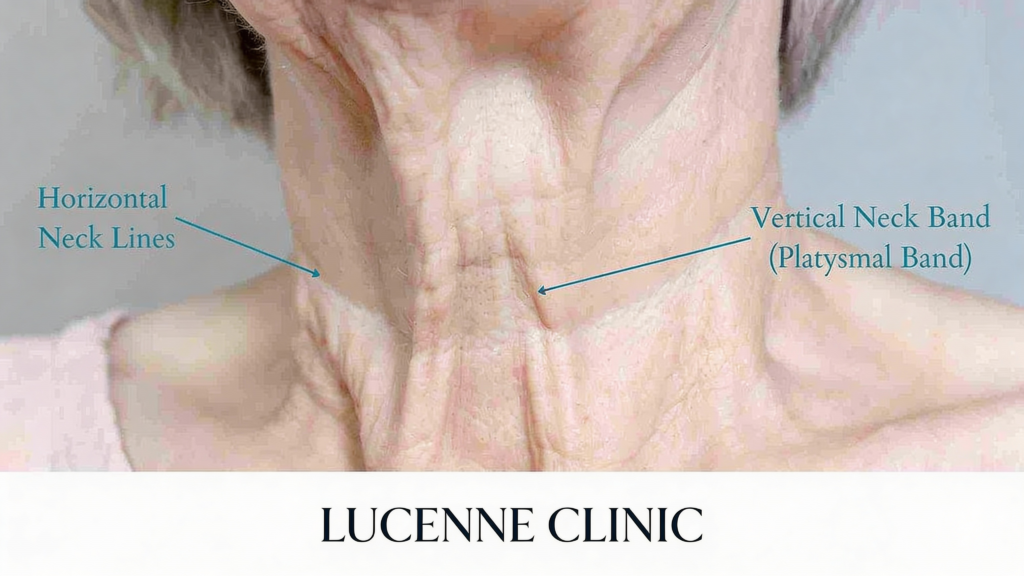
Horizontal neck wrinkles are explained by ‘repetitive folding’ and ’tissue adhesion.’
Fibrous Septa Adhesion:
When you repeatedly bend your head down (hello, Tech Neck!), the septum between the dermis and underlying fascia gets damaged. During healing, this area becomes fibrotic, causing upper and lower tissues to stick together—a phenomenon called ‘adhesion.’
Groove Formation:
Like buttons on a quilted sofa, adhered areas pull the skin inward, forming deep grooves. This can’t be resolved by simply stretching the skin—you need treatment that breaks the adhesion and fills the space.
A 2019 NIH study on CPM-HA (Cohesive Polydensified Matrix Hyaluronic Acid) demonstrated that when fillers were used to separate adhered spaces and inject hyaluronic acid, wrinkle intensity improvement remained statistically significant even 36 weeks post-treatment.
Part 2. [Doctor’s Pick] Symptom-Specific Targeted Solutions
Treatment approaches must completely differ based on the mechanisms explained above. At Lucenne Clinic, we reject one-size-fits-all approaches, instead practicing ‘Multi-Core Layering’ treatment based on root causes.
| Patient Concern | Core Mechanism | Lucenne Tailored Solution |
|---|---|---|
| Deep horizontal wrinkles | Fibrous adhesion between dermis-fascia & volume loss | CPM Filler & Sculptra (separate adhesions, stimulate collagen) |
| Prominent vertical bands | Platysma hypercontraction & tension | Neck Botox (Nefertiti Lift) (muscle relaxation for band flattening) |
| Fine crepey lines | Epidermal photoaging & moisture retention loss | Rejuran & Skin Boosters (dermal environment improvement & density reinforcement) |
| Jawline sagging/double chin | Ligament laxity & fat layer ptosis | Ultherapy & Onda Lifting (SMAS thermal coagulation for lifting & fat reduction) |
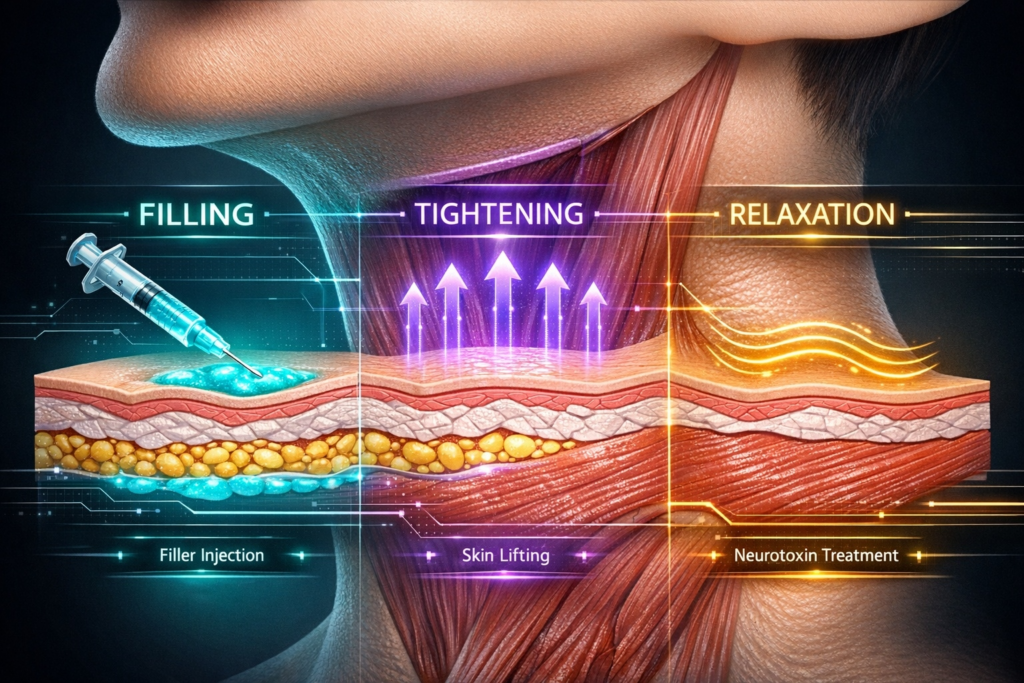
Solution 1. CPM Filler & Sculptra — Break Adhesions, Fill the Void
Soft fillers like Belotero, utilizing CPM (Cohesive Polydensified Matrix) technology, excel at skin integration, naturally permeating even thin areas like the neck.
Fillers separate adhered spaces while filling them with hyaluronic acid, while Sculptra (PDLLA) stimulates fibroblasts to regenerate broken collagen chains.
Duration:
- HA Fillers: 6-12 months
- Sculptra (PDLLA): 12-18 months
Solution 2. Neck Botox (Nefertiti Lift) — Relax Muscles, Erase Bands
The Nefertiti Lift precisely injects Botox into the platysma to reduce contractile force.
In October 2024, Botox received official FDA approval for platysmal band treatment. Vertical band improvement is no longer experimental—it’s validated medical therapy.
Duration: 3-4 months
Solution 3. Ultherapy & Onda — Tighten Fascia, Sculpt Fat
Ultherapy (HIFU) uses high-intensity focused ultrasound to deliver thermal energy to the SMAS layer (superficial musculoaponeurotic system). This immediately contracts existing collagen, followed by 3-6 months of neocollagen production for gradual, natural lifting effects.
Onda (Microwave) simultaneously contracts collagen and reduces fat via microwaves, with cooling systems enabling virtually painless treatment.
Duration:
- Ultherapy: 1-2 years
- Onda: 6 months-1 year
Part 3. FAQ: “Is Neck Treatment Safe?”
Q1. I’ve heard there are dangerous blood vessels in the neck—are injections safe?
(Fact Check)
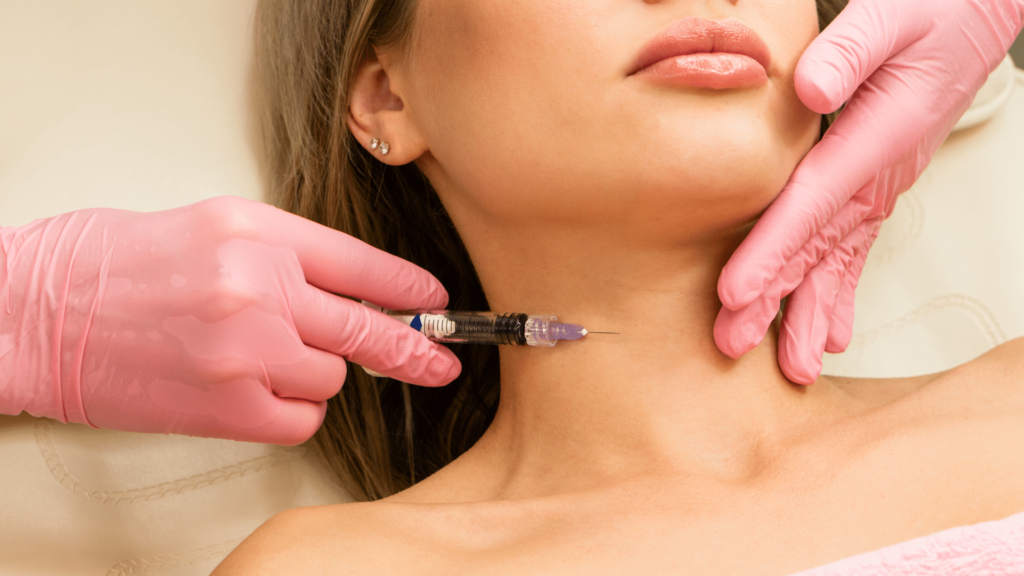
Yes, the neck contains major vessels like the carotid and jugular veins, plus nerves. Blind injection relying solely on tactile sensation can be risky.
At Lucenne Clinic, we use high-resolution ultrasound before treatment to map vessel pathways, skin thickness, and muscle positions in real-time, injecting precisely into safe zones while avoiding vessels.
This is the power of ‘ultrasound-guided treatment.’
Q2. I’ve heard neck fillers tend to clump.
(Fact Check)
Because neck skin is thin, using coarse, firm fillers can cause visible lumps or Tyndall effect (bluish tinge showing through).
To prevent this, we use soft fillers with CPM technology that have excellent skin integration, applying them with a ‘spreading’ technique to avoid clumping.
At Lucenne, we perform delicate molding immediately post-injection to evenly distribute filler for natural results.
Q3. Can neck Botox make it difficult to swallow or change my voice?
(Fact Check)
This is a rare side effect that occurs when Botox diffuses too deeply, affecting muscles involved in swallowing.
At Lucenne, we use ultrasound to confirm platysma depth in real-time, injecting precisely into superficial layers, thereby minimizing this risk while safely improving only vertical bands.
Q4. I’ve read many reviews saying neck treatments don’t work—why is that?
(Fact Check)
Most failures stem from ‘failure to identify root causes.’
- Horizontal wrinkles need filling (fillers)
- Vertical bands need muscle relaxation (Botox)
- Sagging skin needs fascia tightening (Ultherapy/Onda)
A single device or injection alone cannot address complex neck aging.
Lucenne’s ‘Multi-Core Layering’ simultaneously targets 5 layers (epidermis-dermis-fat-muscle-fascia) with cause-specific combination treatments, delivering far higher satisfaction and longer duration than single-modality approaches.
Part 4. Evidence-Based Daily Neck Wrinkle Prevention Guide
If medical treatments are ‘repairs,’ daily habits are ‘maintenance.’ Even the best treatments will be undermined by repeated poor habits accelerating aging.
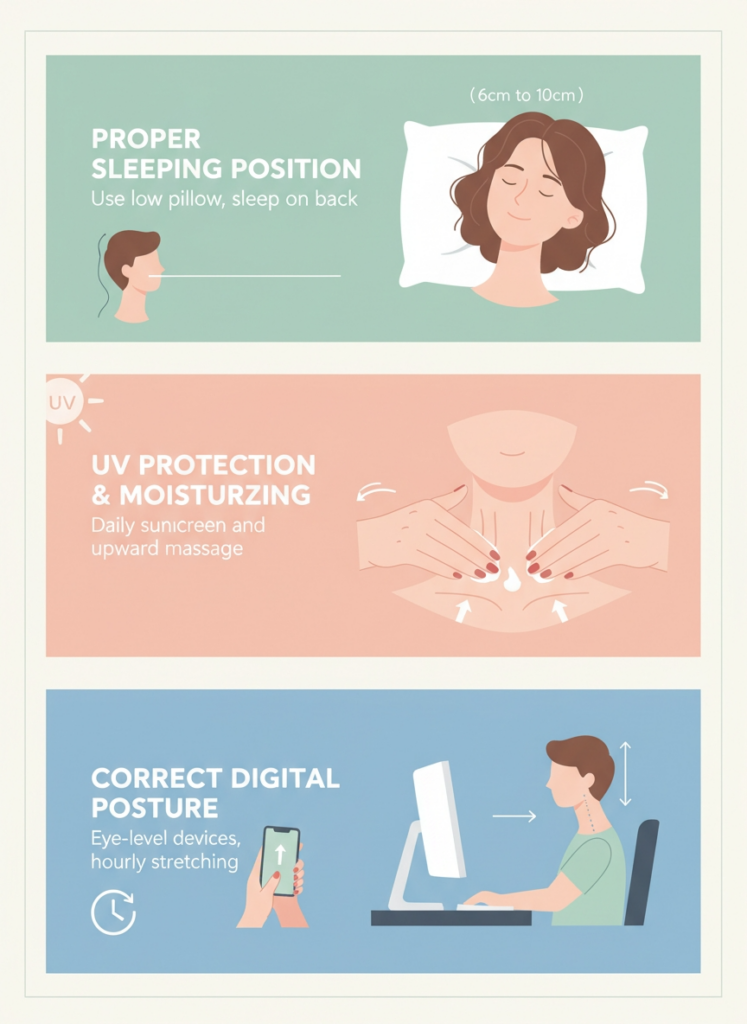
1. Low Pillow Use and Sleep Posture
High pillows keep your neck bent for 6-8 hours during sleep, deeply etching wrinkles.
We recommend 6-10cm low pillows that keep your body and neck level when lying supine. Sleeping prone or curled sideways compresses lateral neck skin, causing asymmetric wrinkles—avoid these positions.
2. Proper Sunscreen Application and Moisturization
The neck receives as much UV exposure as the face but is often neglected in skincare.
UV radiation is the primary collagen destroyer, so diligently apply sunscreen from under the chin to the clavicle line when going out.
During cleansing, wash your neck as thoroughly as your face to remove debris. When applying moisturizer, massage upward from bottom to top with your palms to promote circulation.
3. Digital Device Posture Correction
To prevent ‘Text Neck,’ raise smartphones to eye level when using them, and adjust computer monitor height to align with your eyes.
Every hour, do gentle neck stretches—tilting back, moving side to side—to release muscle tension. This provides significant medical benefits.
Closing Thoughts
Aging is natural, but methods to slow its pace and age more gracefully definitely exist.
Neck wrinkles are like complex knots intertwining anatomical structure and lifestyle habits. Rather than simply ironing the surface, you can only regain smooth neck contours when you untangle the internal knots (adhesions and muscle tension).
If those deepening horizontal lines in the mirror bother you,
don’t struggle alone—seek accurate diagnosis to first examine your neck’s true condition.
We’ll show you your neck’s skin thickness and muscle state
directly via ultrasound.
Lucenne Clinic
📍 Sinnonhyeon Station Exit 3, Gangnam, Seoul
💎 Premium Dermatology Clinic